In the industry, preventing leaks and spills is not just a safety measure — it's an environmental responsibility. Secondary containment has become an essential solution to comply with regulations, protect the environment, and ensure the operational continuity of companies that store hydrocarbons or other hazardous liquids.
Table of contents
What is secondary containment?
Secondary containment is an additional protective barrier installed around tanks or storage systems containing hazardous liquids. Its main function is to prevent substances such as hydrocarbons, oils, or chemicals from leaking into the ground or reaching bodies of water in the event of a failure in the primary containment system.
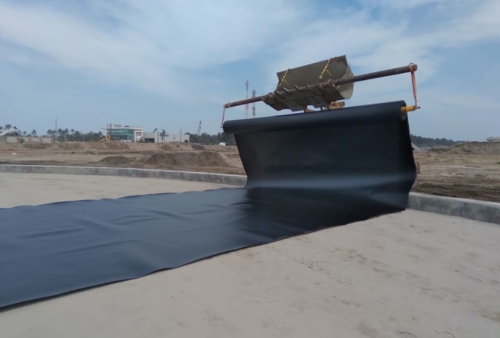
These systems are typically made up of impermeable geomembranes, which ensure watertightness, chemical resistance, and durability even under extreme conditions.
In simple terms: while the storage tank is the first line of defense, secondary containment is the “environmental insurance” that prevents disasters and protects both the business and the environment.
Why is secondary containment important to implement?
Beyond being a regulatory requirement, secondary containment offers key benefits that directly impact operations:
- Regulatory compliance: Many environmental regulations require the implementation of secondary containment systems. Failure to comply can lead to fines, penalties, and operational shutdowns.
- Environmental protection: It prevents contaminants from seeping into the ground or aquifers, reducing negative impacts on ecosystems and nearby communities.
- Reduced operational risks: It minimizes the probability of costly accidents associated with spills.
- Long-term cost savings: Preventing a spill is always more cost-effective than remediating contaminated soil. It also helps protect company assets.
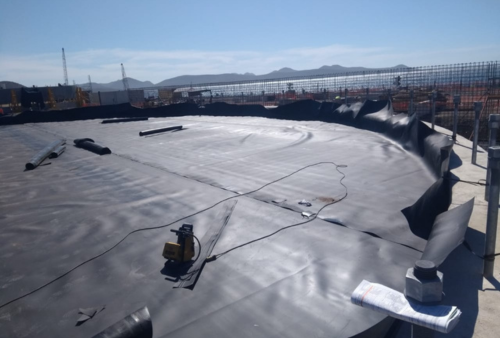
Secondary Containment for Environmental Protection with Flexible Geomembranes
The effectiveness of a secondary containment system depends directly on the materials used. Flexible geomembranes, thanks to their impermeability, chemical resistance, and durability, represent the most advanced option for protecting tanks and soil. Their application ensures not only spill control but also long-term structural reliability. In practice, this translates into a series of technical, operational, and economic advantages that make a significant difference in every project.
Extended Tank Lifespan
One of the key benefits of using flexible geomembranes in secondary containment is the effective protection of the tank’s foundation ring. This prevents premature wear, extends the tank’s service life, and reduces maintenance costs.
Guaranteed Impermeability
By creating a watertight system around the tank, geomembranes ensure that any leak or spill is effectively contained, eliminating escape routes for hazardous liquids. This impermeability meets the strictest environmental regulatory standards and provides confidence to contractors, engineers, and operators alike.
High Chemical Resistance
High-specification geomembranes offer superior resistance to hydrocarbons, acids, alkalis, and other corrosive compounds. This ensures that the secondary containment system remains functional even under prolonged exposure to aggressive substances, preserving its essential physical and mechanical properties.
Proven Durability
Technical testing and field experience show that, when properly installed and maintained, geomembranes can exceed 25 years of continuous service without significant performance loss. This durability ensures reliable operations, reduces replacement interventions, and maintains ongoing protection of assets and critical infrastructure.
Prevention of Economic Losses
Implementing secondary containment systems with flexible geomembranes significantly reduces the risk of regulatory penalties, environmental cleanup costs, and legal liabilities associated with spills. By effectively containing hazardous substances, companies protect their investment, safeguard their reputation, and strengthen their long-term operational sustainability.
Types of Geomembranes Used in Secondary Containment
HDPE Geomembrane (High-Density Polyethylene)
- Outstanding chemical resistance
- High durability and UV resistance
- Ideal for projects requiring a long service life (over 25 years)
PVC Geomembrane (Polyvinyl Chloride)
- Flexible and easy to install
- High tensile strength
- Self-extinguishing with excellent cost-benefit ratio
XR-5 Geomembrane
- Designed for aggressive liquids
- Dimensional stability (low expansion and contraction)
- Excellent UV resistance
- 10-year warranty
Compliance and Responsibility
Regulatory agencies such as the EPA (under 40 CFR 112 for Spill Prevention, Control, and Countermeasure Plans) and state environmental departments require secondary containment for many storage operations.
Beyond compliance, these systems represent a tangible commitment to environmental stewardship, demonstrating that an organization prioritizes safe, sustainable operations.
By incorporating geomembrane liners into containment systems, companies meet and often exceed these regulatory standards while protecting valuable natural resources.
Components of a Secondary Containment System
A secondary containment system is designed to capture and control any accidental release from a primary storage unit, such as a fuel tank or chemical vessel, so that the material remains inside a lined and sealed area and never reaches the ground or nearby water sources. A typical system includes:
- Containment structure: a reinforced concrete or earthen berm that defines the containment area.
- Geomembrane liner: an HDPE or LLDPE geomembrane that creates a fully impermeable base and walls.
- Drainage and monitoring: a system to quickly detect and manage any spill.
The liner is the core of the system. By isolating stored materials from the surrounding environment, it blocks chemical infiltration that could contaminate groundwater aquifers, prevents corrosion and erosion of the containment structure, simplifies cleanup after minor spills, and extends the service life of the facility. To guarantee liner integrity from day one, installation should follow strict QA/QC protocols, including seam testing, vacuum inspections, and field verification.
Real-World Applications
Secondary containment systems are used wherever chemicals, fuels, or process liquids are stored or transferred. Common applications include:
- Refueling areas and above-ground storage tanks
- Chemical manufacturing plants
- Power generation facilities
- Mining operations and processing plants
- Agricultural and fertilizer storage sites
Frequently Asked Questions
What is the purpose of a secondary containment liner?
A secondary containment liner prevents spills and leaks from fuel or chemical storage areas from reaching the soil or groundwater, providing an additional layer of environmental protection.
What materials are commonly used for containment liners?
Most systems use HDPE or LLDPE geomembranes for their chemical resistance, durability, and impermeability. In some cases, geosynthetic clay liners (GCLs) are added for enhanced protection.
Are secondary containment liners required by law?
Yes. Regulations such as the EPA’s Spill Prevention, Control, and Countermeasure (SPCC) rule require secondary containment for many types of storage and refueling systems.
How long do containment liners last?
With proper installation and maintenance, HDPE liners can perform for 20–30 years or longer, even under constant exposure to sunlight and chemicals.
Who can install secondary containment systems?
SAI provides complete design, material selection, and certified installation services for containment systems across the industrial, mining, and energy sectors.
SAI: Your Ultimate Solution for Secondary Containment with High-Quality Geomembranes
At SAI, we have over 30 years of experience providing environmental solutions using geosynthetic products. One of our specialties is secondary containment systems with geomembranes, designed to prevent leaks and spills, protect the soil, and ensure compliance with environmental regulations.
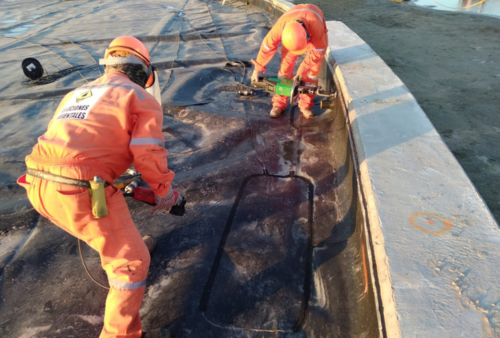
With over 33 million m2 of geomembranes installed and 1,564 projects executed across approximately 10 countries, we have proven that environmental prevention is also an investment in safety, trust, and operational continuity.
At SAI, we are ready to help you protect your project and the environment with long-lasting solutions that build a more sustainable future. Contact us.